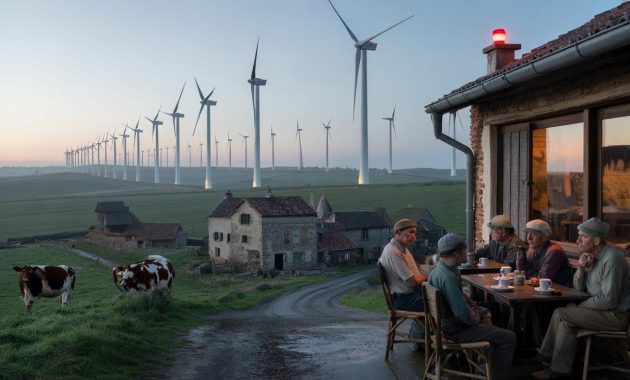
As the first rays of dawn stretch across the rolling fields, the tranquil silence of a rural French village is shattered by the relentless whir of wind turbines. What was once a peaceful pastoral scene is now dominated by towering metal giants, their blades slicing through the air with an unsettling rhythm. For the residents of this small community, the arrival of these renewable energy behemoths has become a source of both hope and anguish.
The debate surrounding wind turbines in the countryside is a complex and contentious one, pitting the urgent need to combat climate change against the deeply personal impact on the lives of those who call these rural landscapes home. As the global push for sustainable energy solutions intensifies, the clash between environmental progress and the preservation of traditional ways of life has become increasingly pronounced.
In the heart of this debate, the residents of this French village find themselves caught in the crosshairs, forced to reconcile their desires for a clean, healthy planet with the very real consequences that these wind turbines have imposed on their daily lives. It is a struggle that echoes across rural communities worldwide, as they grapple with the challenge of balancing the needs of the global environment with the sanctity of their local way of life.

The Promise of Renewable Energy
The push for wind energy has been driven by the urgent need to reduce our reliance on fossil fuels and curb the devastating effects of climate change. Wind power, with its ability to generate clean, renewable electricity, has been hailed as a crucial component in the global effort to transition to a more sustainable future. Governments and policymakers have enthusiastically embraced wind energy as a solution, offering generous subsidies and incentives to encourage its widespread adoption.
For many rural communities, the prospect of hosting wind farms has been seen as an opportunity to boost local economies and contribute to the greater good. The promise of lucrative land leases, job creation, and increased tax revenue has lured some landowners and local officials to welcome these developments with open arms. The allure of clean, green energy has also resonated with environmentally conscious residents who are eager to do their part in combating climate change.
However, the reality of living in the shadow of wind turbines has proven to be far more complex than the rosy projections. As the towers have risen and the blades have begun to spin, the residents of this French village have found themselves grappling with a host of unexpected challenges that have put their way of life in jeopardy.

The Toll on Rural Residents
The arrival of wind turbines in the French countryside has had a profound impact on the daily lives of the residents. The constant hum and vibration of the towering structures have disrupted the tranquility that was once a hallmark of this rural idyll. Many locals report experiencing sleep disturbances, headaches, and feelings of anxiety, as the incessant noise and shadow flicker from the turbines have become an inescapable part of their existence.
Beyond the immediate physical and psychological toll, the presence of wind farms has also had a more insidious effect on the social fabric of the community. Tensions have erupted between those who have embraced the turbines and those who have fiercely resisted them, with deep divisions emerging over the perceived benefits and drawbacks of this renewable energy initiative. The once-cohesive community has become fractured, as neighbors find themselves pitted against one another in a battle over the future of their shared landscape.
The impact on property values has been another source of concern for the residents. Many have watched helplessly as the value of their homes and land has plummeted in the shadow of the towering turbines, eroding their financial security and jeopardizing their ability to pass on their generational wealth to their children. The prospect of being trapped in homes that have become virtually unsellable has only exacerbated the sense of powerlessness and resentment felt by those who never asked for these structures to be erected in their backyard.

The Clash of Competing Interests
As the debate over wind turbines in the countryside rages on, the competing interests of various stakeholders have become increasingly evident. On one side, policymakers and renewable energy advocates argue that the urgent need to address climate change demands swift and decisive action, even if it means disrupting the traditional way of life in rural communities.
They point to the undeniable environmental benefits of wind power, which can significantly reduce greenhouse gas emissions and lessen our reliance on fossil fuels. The economic incentives, such as job creation and increased tax revenue, are also touted as compelling reasons to prioritize the expansion of wind energy infrastructure, even in the face of local opposition.
On the other hand, the residents of this French village, and others like it, maintain that their fundamental right to a peaceful existence and the preservation of their rural heritage should not be sacrificed in the name of environmental progress. They argue that the negative impacts on their health, their property values, and their social cohesion far outweigh the purported benefits of wind energy, and that policymakers have failed to adequately consider the lived experiences of those who must bear the brunt of these developments.

The Search for Balance
As the debate over wind turbines in the countryside rages on, both sides are grappling with the need to find a delicate balance between the demands of environmental progress and the preservation of rural communities. For the residents of this French village, the search for a solution that reconciles their desire for a clean, sustainable future with their right to a peaceful, uninterrupted way of life has become an increasingly urgent priority.
Some experts have suggested that a more nuanced and collaborative approach, one that involves meaningful engagement with local stakeholders, could help to bridge the divide. By incorporating the insights and concerns of rural residents into the planning and implementation of wind energy projects, policymakers may be able to find a path forward that respects the needs of both the environment and the communities that are directly impacted.
Others have called for a closer examination of the regulatory frameworks and siting criteria that govern the placement of wind turbines, arguing that more stringent standards and oversight could help to mitigate the negative consequences experienced by rural dwellers. The search for innovative solutions, such as the development of less intrusive turbine designs or the strategic clustering of wind farms in less populated areas, may also offer a way to balance the competing demands of progress and preservation.

A Cautionary Tale for the Future
As the world continues to grapple with the urgent need to address climate change, the story of this French village and its struggle with wind turbines serves as a cautionary tale for the challenges that lie ahead. The tension between environmental imperatives and the preservation of local communities is not unique to this one rural enclave, but rather a global phenomenon that will only become more pronounced as the push for renewable energy intensifies.
The lessons learned here, both in terms of the human toll and the need for more inclusive and responsive policymaking, will be crucial as other countries and regions navigate the complex landscape of renewable energy development. By acknowledging the valid concerns of rural residents and seeking to find equitable solutions, policymakers may be able to avoid the divisive conflicts that have played out in this French village, ultimately charting a path toward a sustainable future that respects the needs of all stakeholders.
As the sun sets on this rural landscape, the towering wind turbines continue to spin, a constant reminder of the delicate balance that must be struck between progress and preservation. The residents of this French village, and countless others like them, will continue to grapple with this challenge, their voices echoing across the countryside in the hopes of finding a way to reconcile their dreams for a better world with the realities of their daily lives.

Expert Perspectives
“The rapid expansion of wind energy infrastructure in rural areas has created a complex set of challenges that policymakers must address with greater nuance and sensitivity. While the environmental benefits of wind power are clear, the negative impacts on the lives of those who call these communities home cannot be ignored.”
– Dr. Emilie Durand, Rural Policy Analyst
“We’re seeing a growing rift between those who see wind turbines as a necessary step towards a sustainable future and those who feel that their way of life is being sacrificed in the process. Bridging this divide will require a more collaborative approach that prioritizes the concerns of local stakeholders.”
– Sarah Leblanc, Environmental Policy Researcher

“The siting and design of wind farms must be carefully considered to minimize the disruption to rural communities. Innovative solutions, such as less intrusive turbine models or strategic clustering, could help to strike a better balance between environmental and community needs.”
– Jean-Luc Dupont, Renewable Energy Specialist

| Potential Benefits of Wind Turbines | Potential Drawbacks of Wind Turbines |
|---|---|
|
|
In the end, the debate over wind turbines in the countryside is not a simple matter of environmental progress versus rural preservation. It is a complex, multifaceted issue that demands a delicate balancing act, one that requires policymakers, renewable energy advocates, and rural communities to work together in search of equitable solutions.
FAQ
What are the main concerns of rural residents about wind turbines?
The primary concerns of rural residents include the disruption to their peaceful way of life due to the noise and vibration of the turbines, the negative impact on property values, and the social divisions within the community that have emerged as a result of the wind farm development.
How can the placement and design of wind turbines be improved to better address the needs of rural communities?
Experts suggest that a more collaborative approach to the siting and planning of wind farms, with greater input from local stakeholders, could help to mitigate the negative impacts. Additionally, the development of less intrusive turbine designs and the strategic clustering of wind farms in less populated areas may offer more balanced solutions.
What are the key environmental and economic benefits of wind energy that are driving its expansion in rural areas?
The primary environmental benefits of wind energy include its ability to generate clean, renewable electricity and reduce greenhouse gas emissions. Economically, wind farm development can bring jobs, tax revenue, and land lease payments to rural communities, making it an attractive proposition for some local governments and landowners.
How can policymakers and renewable energy advocates better address the concerns of rural residents?
Experts suggest that a more inclusive and responsive approach to policymaking, one that actively engages with local stakeholders and incorporates their insights and concerns into the planning process, could help to bridge the divide between environmental progress and rural preservation.
Is there a way to find a balance between the needs of the environment and the needs of rural communities?
While the search for balance is complex and ongoing, experts believe that with innovative solutions, greater collaboration, and a more nuanced understanding of the challenges faced by rural residents, it is possible to chart a path forward that respects the needs of both the environment and the communities that are directly impacted by renewable energy development.
How widespread is the conflict between wind turbines and rural communities globally?
The tension between wind energy expansion and the preservation of rural ways of life is not unique to the French village featured in this article, but rather a global phenomenon that is playing out in various forms across different regions and communities. As the push for renewable energy solutions intensifies, these conflicts are likely to become more pronounced in the years to come.
What role can local communities play in shaping the development of wind energy projects?
Experts suggest that by actively engaging with local stakeholders, policymakers and renewable energy developers can incorporate the insights and concerns of rural residents into the planning and implementation of wind energy projects. This collaborative approach can help to ensure that the needs of both the environment and the community are taken into consideration.
Are there any examples of successful wind energy projects that have managed to balance the needs of rural communities?
While examples of truly successful wind energy projects that have fully reconciled the needs of rural communities are relatively rare, some communities have found more nuanced solutions through careful planning, community engagement, and the adoption of less intrusive turbine designs. These case studies offer valuable lessons for policymakers and renewable energy advocates going forward.