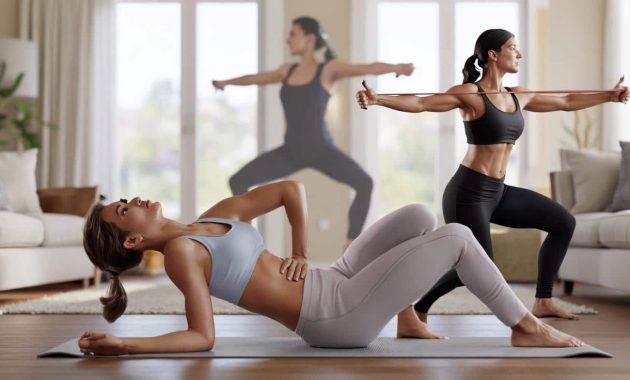
Flat abs have long been the Holy Grail of fitness, but as society’s priorities shift, a new focus has emerged: the importance of a strong, functional core. Across kitchens, offices, and commuter trains, people are talking less about chiseled six-packs and more about a core that can truly support the body, even if the midsection doesn’t look perfectly toned.
The reasons behind this shift are manifold. Many have come to realize that a bloated-looking belly often stems not from excess fat, but from a weakened core that fails to properly hold the body’s internal structures in place. Additionally, the pursuit of vanity-driven abs can lead to imbalances and even injury if the deeper stabilizing muscles are neglected. In the end, true core strength is about more than just appearances – it’s about foundational health and mobility.
If you’re ready to ditch the six-pack dream and focus on building a stronger, more resilient core, read on. These three exercises can help reshape your midsection over time while improving your overall stability and posture.

The Hollow Body Hold
This deceptively simple exercise targets the deepest layers of the core, engaging the transverse abdominis, which acts as a natural “corset” to support the spine. To perform the hollow body hold, lie on your back with your arms extended overhead and your legs straight. Engage your core by pressing your lower back into the floor, then lift your shoulders, arms, and legs a few inches off the ground, creating a rounded, “hollow” shape with your body.
Hold this position for 30-60 seconds, breathing deeply and avoiding any arching or sagging in the back. As you get stronger, gradually increase the hold time. Remember to keep your core braced throughout the movement – this is not a time to let your belly pooch out.
The hollow body hold may feel challenging at first, but with regular practice, you’ll start to notice improvements in your posture, balance, and overall core stability.

The Pallof Press
The Pallof press is a fantastic exercise for building anti-rotation strength in the core, which is crucial for preventing lower back pain and improving athletic performance. Stand with your side perpendicular to a cable machine or resistance band, grasping the handle or band at chest height with both hands.
Keeping your core braced, press the weight straight out from your chest, extending your arms fully. Resist the urge to rotate your torso as you push the weight away, then slowly return to the starting position. Repeat for the desired number of reps, then switch sides.
The Pallof press challenges your core to resist the rotational forces generated by the weight, which translates to better control and stability in daily activities and sports. Start with a lighter resistance and focus on proper form, gradually increasing the weight as you get stronger.

| Exercise | Muscles Targeted | Benefits |
|---|---|---|
| Hollow Body Hold | Transverse abdominis, rectus abdominis, obliques | Improves spinal stability, posture, and balance |
| Pallof Press | Obliques, transverse abdominis, rectus abdominis | Builds anti-rotation strength, reduces lower back pain |
The Dead Bug
The dead bug exercise is a great way to target the deep core muscles while also improving hip and shoulder mobility. Lie on your back with your arms extended overhead and your legs lifted, knees bent at 90 degrees.
Slowly lower one arm and the opposite leg towards the floor, keeping your core engaged and your lower back pressed into the ground. Return to the starting position, then repeat on the other side. Focus on maintaining a neutral spine and avoiding any arching or sagging in your back.
The dead bug is an excellent exercise for beginners and advanced exercisers alike. Start with just a few repetitions per side, gradually increasing the number of sets and reps as you build strength and control.

“The core is the foundation of the body, and a strong, functional core is essential for overall health and performance. These exercises don’t just target the superficial abs – they engage the deep stabilizing muscles that support the spine and enable better movement in all planes.”
– Sarah Walls, certified personal trainer and founder of SAPT Strength & Performance Training
While the pursuit of a perfectly flat stomach is a common fitness goal, it’s important to remember that true core strength goes beyond mere aesthetics. By focusing on exercises that build stability, control, and muscular endurance, you can reshape your midsection while improving your overall function and resilience.

Pairing Core Work with Habits That Calm the Belly
In addition to targeted core exercises, there are several lifestyle habits that can help reduce bloating and improve overall digestive health. Staying hydrated, incorporating more fiber-rich foods, and managing stress through practices like meditation or deep breathing can all contribute to a flatter, less swollen-looking midsection.
It’s also important to be mindful of any food intolerances or sensitivities that may be causing inflammation and digestive issues. Work with a healthcare professional to identify and address any underlying problems, then pair dietary changes with a consistent core strengthening routine.
Remember, the goal is not necessarily a six-pack, but rather a core that supports your body’s natural functions with ease and resilience. By focusing on exercises that target the deeper stabilizing muscles, you can enjoy the benefits of a stronger, more balanced midsection without the pressure of perfection.

Core Training After 40: Why It Becomes Non-Negotiable
As we age, the importance of core strength only becomes more pronounced. After the age of 40, our muscles tend to lose mass and power at a faster rate, making it crucial to prioritize exercises that maintain and even improve our stability and balance.
A strong core is particularly important for preventing falls and maintaining independence as we get older. It also helps to support the spine, reducing the risk of back pain and other age-related musculoskeletal issues. By incorporating core-focused exercises into your routine, you can improve your overall quality of life and remain active and independent for years to come.
Remember, it’s never too late to start building a stronger core. Even if you’re new to exercise or haven’t prioritized it in the past, you can still see significant benefits by committing to a consistent core training program. The key is to start slow, focus on proper form, and gradually increase the intensity and difficulty of your exercises over time.

Fitting Core Exercises into Your Everyday Life
One of the challenges of incorporating more core work into your routine is finding the time and space to do it. Fortunately, many of these exercises can be easily integrated into your daily activities, whether you’re at home, at the office, or on the go.
For example, you can practice the hollow body hold while waiting in line or sitting at your desk. The Pallof press can be done with a resistance band in your living room or even during a work break. And the dead bug exercise requires minimal space, making it a great option for hotel rooms or small home gyms.
The key is to be creative and look for opportunities to sneak in a few reps or holds throughout the day. Over time, these small bursts of core work will add up, helping to build a stronger, more resilient midsection without requiring a significant time commitment.

| Exercise | How to Fit it In |
|---|---|
| Hollow Body Hold | Do it while waiting in line, sitting at your desk, or watching TV |
| Pallof Press | Use a resistance band at home or during a work break |
| Dead Bug | Perform it in your living room or hotel room |
“The key to building a stronger core is consistency. Even small, frequent bouts of these exercises can make a big difference over time. The key is to find ways to incorporate them into your everyday life, whether it’s during your commute, at your desk, or while watching TV.”
– Dr. Lara Heimann, physical therapist and founder of LYT Yoga
Understanding the Fundamentals: Deep Core and Bracing
Before diving into these core-strengthening exercises, it’s important to understand a few key concepts that will help you get the most out of your training.
First, there’s the idea of the “deep core” – the inner layers of abdominal and spinal muscles that provide stability and support for the entire body. These muscles, including the transverse abdominis and multifidus, are often overlooked in favor of the more visible rectus abdominis (the “six-pack” muscles).
Proper “bracing” is also essential for engaging the deep core. This involves creating tension throughout the midsection, as if you’re preparing to be punched in the stomach. This bracing action helps to stabilize the spine and transfer force effectively from the lower body to the upper body.
“Bracing the core is a critical skill for any movement, whether it’s lifting weights, running, or even just sitting at your desk. Learning to consciously engage the deep core muscles takes practice, but it’s a game-changer for improving your overall strength and stability.”
– Dr. John Rusin, physical therapist and performance specialist
By understanding and incorporating these foundational principles into your core training, you’ll be well on your way to building a stronger, more resilient midsection that supports your body’s natural functions with ease.
Risks, Red Flags, and When to Adjust the Plan
As with any exercise program, it’s important to be mindful of potential risks and red flags, especially when it comes to core training. Improper form or pushing too hard too fast can lead to strains, sprains, or other injuries that may set you back in your progress.
If you experience any sharp pain, tingling, or numbness during these exercises, stop immediately and consult a healthcare professional. Likewise, if you notice excessive arching or sagging in your back, it may be a sign that you need to adjust the exercise or reduce the difficulty level.
Remember, the goal of these core-strengthening exercises is to build a stronger, more resilient midsection, not to push yourself to the point of injury. By listening to your body, focusing on proper form, and gradually increasing the intensity, you can reap the benefits of a stronger core without putting your health at risk.
What if I have lower back pain?
If you experience lower back pain, it’s especially important to focus on proper form and core bracing with these exercises. Start with lighter weights or resistance and prioritize controlled, stable movements. You may also want to work with a physical therapist to address any underlying issues contributing to the pain.
Can I do these exercises every day?
While you can certainly incorporate these core-strengthening exercises into your daily routine, it’s generally recommended to allow for at least one day of rest between core-focused workouts. This gives your muscles time to recover and adapt, helping to prevent overuse injuries.
How long will it take to see results?
The timeline for seeing results from core-strengthening exercises can vary depending on factors like your starting fitness level, consistency of your training, and overall lifestyle habits. However, most people begin to notice improvements in their posture, stability, and midsection appearance within 4-8 weeks of consistent practice.
What if I have diastasis recti?
Diastasis recti, or the separation of the abdominal muscles, is a common condition that can occur during pregnancy or after significant weight fluctuations. If you have diastasis recti, it’s essential to work with a pelvic floor physical therapist or other qualified professional to ensure you’re performing exercises that won’t exacerbate the condition.
How can I make these exercises more challenging?
As you get stronger, you can increase the difficulty of these core-strengthening exercises by adding weight, increasing the hold time, or incorporating more unstable surfaces or movements. Just be sure to maintain proper form and bracing throughout the exercise.
What if I have limited mobility or flexibility?
If you have any mobility or flexibility limitations that make these exercises challenging, start with modified versions or work on improving your range of motion through dedicated stretching and mobility work. It’s important to listen to your body and make adjustments as needed to avoid injury.
Can I do these exercises while pregnant?
Yes, with the approval of your healthcare provider, many of these core-strengthening exercises can be safely performed during pregnancy. Just be sure to modify as needed to accommodate your changing body and avoid any positions or movements that may put undue stress on the abdominal muscles or pelvic floor.