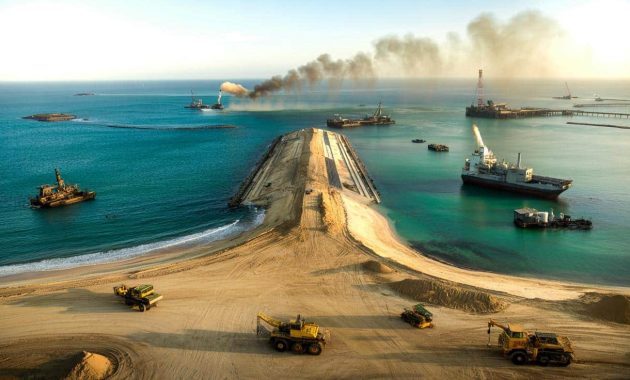
From the window of a low-flying plane, the first thing you notice is the color. A perfect turquoise ring surrounds a series of islands, each one larger than the last, rising up from the deep blue waters of the South China Sea. This mesmerizing sight is the result of one of the most ambitious and controversial engineering projects of the 21st century: China’s creation of entirely new land masses through a relentless campaign of dredging and reclamation.
Over the past 12 years, China has been systematically transforming reefs, sandbars, and other submerged features into permanent islands, complete with military outposts, airstrips, and port facilities. Hundreds of millions of tons of sand, rock, and concrete have been poured into the ocean, extending China’s strategic foothold in this vital and heavily disputed waterway.
The implications of this unprecedented effort to remake the physical geography of the region are far-reaching, sparking geopolitical tensions, environmental concerns, and questions about humanity’s relationship with the natural world. As these artificial islands take shape, they offer a glimpse into the future of a world where even the oceans are not beyond our capacity to transform.

From Blue Water to Beige Concrete
The process of creating these islands begins with dredging. Enormous ships, some as large as football fields, scoop up sand and sediment from the seafloor, vacuuming up material to be used as the foundation for the new land masses. This dredging not only dramatically alters the underwater landscape but also releases plumes of silt that can smother nearby coral reefs and marine ecosystems.
Once the basic shape of an island has been established, the real work begins. Millions of tons of rock, cement, and other construction materials are then transported to the site and used to build up the islands, transforming them from submerged features into permanent, above-water landforms. The scale of this effort is staggering, with some islands growing to cover several square kilometers.
The result is a series of highly engineered islands, complete with military-grade infrastructure, including airfields, ports, and missile defense systems. These islands serve as strategic outposts, allowing China to extend its territorial claims and project power across a vast expanse of the South China Sea.

The Geopolitical Stakes
China’s island-building campaign has raised alarm bells throughout the region and around the world. Many of the islands are located in areas claimed by other countries, such as the Philippines, Vietnam, and Malaysia, leading to heightened territorial disputes and the risk of military confrontation.
The United States, which has long maintained a strong presence in the South China Sea, has criticized China’s actions as a unilateral attempt to change the status quo and assert control over the strategically important waterway. This has led to increased tensions, with the U.S. conducting frequent “freedom of navigation” operations in the region to challenge China’s territorial claims.
Beyond the geopolitical implications, the environmental impact of these artificial islands is also a major concern. The dredging and construction work has already caused significant damage to coral reefs and other marine habitats, which are vital to the region’s delicate ecosystem. As the islands continue to grow, the long-term consequences for the ocean’s health and biodiversity remain uncertain.

Reshaping the Sea
The creation of these islands represents a profound shift in humanity’s relationship with the natural world. For centuries, the oceans have been seen as vast, unalterable expanses, beyond the reach of our transformative powers. But through sheer determination and technological might, China has demonstrated that even the sea can be reshaped to suit our strategic and economic interests.
This raises deep questions about the limits of our ability to manipulate the environment and the ethics of such large-scale interventions. As the world grapples with the impacts of climate change and the need to protect fragile ecosystems, the story of China’s artificial islands serves as a cautionary tale about the unintended consequences of our actions.
Yet, it also points to a future where human ingenuity and engineering prowess may allow us to overcome even the most daunting natural barriers. The islands, for all their controversy, stand as a testament to our capacity to transform the world around us, for better or for worse.

Experts Weigh In
“These islands represent a fundamental shift in the geopolitical balance of power in the South China Sea. China is essentially creating new territory, which it can then use to bolster its territorial claims and project military force across the region.”
– Dr. Sarah Teo, Research Fellow at the S. Rajaratnam School of International Studies
“The environmental impact of this project is deeply concerning. The dredging and construction work is already causing significant damage to coral reefs and marine habitats, which are vital to the region’s delicate ecosystem. The long-term consequences could be devastating.”
– Dr. John McManus, Professor of Marine Biology at the University of Miami

“This is an unprecedented engineering feat, the likes of which the world has never seen. China has demonstrated an incredible ability to transform the natural landscape on a massive scale. However, the ethical and legal implications of this project are highly complex and will continue to be debated for years to come.”
– Dr. Huang Jing, Director of the Institute of Southeast Asian Studies at the National University of Singapore

As the artificial islands continue to take shape, the world watches with a mix of awe, concern, and uncertainty. This bold and ambitious project has the power to reshape not only the physical geography of the South China Sea but also the geopolitical landscape of the entire region. The consequences, both intended and unintended, will reverberate for generations to come.
What Comes Next?
With the foundations of the islands now firmly in place, the next phase of China’s project is to further develop and fortify these strategic outposts. This includes the construction of additional military facilities, such as radar installations, missile batteries, and even potential submarine bases.
The islands are also likely to become hubs of economic activity, with the potential for commercial ports, airports, and other infrastructure to support trade and transportation. China has already indicated that it plans to establish research stations and potentially even tourist facilities on some of the islands.

However, the ongoing territorial disputes and concerns over the environmental impact of the project mean that the future of these artificial islands remains highly uncertain. As tensions in the region continue to simmer, the world will be closely watching to see how this unprecedented engineering feat unfolds and what it means for the balance of power in the South China Sea.
Insights and Observations
The creation of these artificial islands is a testament to the remarkable ingenuity and ambition of the human species. But it also highlights the profound challenge of striking a balance between technological progress and environmental stewardship.
As we continue to push the boundaries of what is possible, it is crucial that we also carefully consider the long-term consequences of our actions. The story of China’s artificial islands serves as a powerful reminder that even the most ambitious engineering projects can have unintended and far-reaching impacts on the natural world.

FAQ
How long have China been building these artificial islands?
China has been systematically creating these artificial islands in the South China Sea for over 12 years, starting in the early 2010s.
What is the total area of the artificial islands created by China?
The total area of the artificial islands created by China in the South China Sea is estimated to be over 3,200 acres (1,300 hectares).
What kind of infrastructure has been built on the artificial islands?
The artificial islands have been transformed into strategic outposts, complete with military-grade infrastructure such as airfields, ports, missile defense systems, and radar installations.
How has the international community responded to China’s island-building activities?
China’s island-building campaign has raised concerns and criticism from other countries in the region, as well as the United States, which has conducted “freedom of navigation” operations to challenge China’s territorial claims.
What are the environmental concerns associated with the artificial islands?
The dredging and construction work involved in creating the artificial islands has already caused significant damage to coral reefs and other fragile marine ecosystems, raising concerns about the long-term environmental impact.
What are the potential economic and commercial uses of the artificial islands?
China has indicated that the islands could be used to support economic activities, such as the development of commercial ports, airports, and even tourist facilities.
How might the artificial islands impact the regional balance of power in the South China Sea?
The artificial islands are seen as a way for China to bolster its territorial claims and project military power across the South China Sea, potentially shifting the geopolitical balance of power in the region.
What is the legal status of the artificial islands under international law?
The legal status of the artificial islands is a highly contentious issue, with ongoing disputes over the legitimacy of China’s territorial claims and the potential violations of international maritime law.