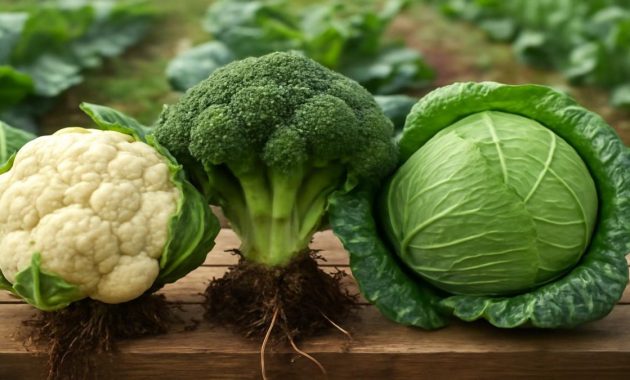
Tucked between the sea of greens and the rainbow of vegetables at your local farmer’s market, you might have noticed an unusual sight – pale, snowflake-like heads nestled alongside their deep-green cousins. These curious specimens are, in fact, the very same plant, just different varieties of the humble Brassica oleracea.
It’s a botanical secret that even seasoned cooks and avid gardeners often overlook: cauliflower, broccoli, and cabbage are all members of the same plant family, with a shared genetic heritage that stretches back centuries. Through the patient work of human selection, these once-similar vegetables have evolved into distinct culinary stars, each with its own unique texture, flavor, and application in the kitchen.
Tracing the Brassica Family Tree
The Brassica genus encompasses a diverse array of plants, from the familiar cabbage and kale to the lesser-known kohlrabi and rutabaga. At the heart of this botanical clan lies the species Brassica oleracea, a wild mustard plant native to the Mediterranean region. Over millennia, humans have selectively bred this humble weed, coaxing out the distinct characteristics that we now recognize as our beloved brassicas.

As early human civilizations began to cultivate and experiment with these plants, the seeds of culinary diversity were sown. What was once a single, leafy species gradually branched out into the myriad forms we enjoy today, each one a testament to the power of human ingenuity and the resilience of nature.
The story of how cauliflower, broccoli, and cabbage came to be is a fascinating glimpse into the dynamic interplay between nature and human intervention. It’s a tale of patience, perseverance, and the endless possibilities that arise when we collaborate with the natural world.
The Cauliflower Conundrum
Of all the Brassica cultivars, cauliflower is perhaps the most enigmatic. Unlike its leafy siblings, which showcase their vibrant greens, cauliflower hides its true nature beneath a veil of pale, tightly packed florets. This unique trait is the result of a genetic mutation that suppresses the plant’s typical leaf development, allowing the inflorescence (the cluster of flowers) to swell and form the familiar curd-like head.

The origins of this curious vegetable can be traced back to the Mediterranean region, where ancient Greeks and Romans were captivated by its delicate flavor and unusual appearance. As culinary traditions spread, cauliflower eventually made its way to Europe, where it continued to evolve and diversify, giving rise to the various cultivars we enjoy today.
Interestingly, cauliflower’s distinctive appearance has also led to some misconceptions about its relationship to other Brassicas. Many people assume that it is a separate species, unaware of the deep genetic ties that bind it to broccoli, cabbage, and the rest of the clan.
Broccoli’s Botanical Breakthrough
While cauliflower may be the most visually striking member of the Brassica family, broccoli is the one that has captured the hearts and palates of health-conscious consumers in recent years. With its vibrant green florets and robust, nutty flavor, broccoli has become a dietary superstar, touted for its abundance of vitamins, minerals, and antioxidants.

Like cauliflower, broccoli is the result of selective breeding, tracing its roots to wild Brassica oleracea plants. However, instead of favoring the flower buds, early farmers and horticulturists focused on developing the plant’s thick, succulent stems and branching clusters of tiny green flower heads.
The evolution of broccoli is a testament to the power of human ingenuity and the resilience of nature. What was once a relatively obscure vegetable has now become a staple in kitchens around the world, celebrated for its nutritional value and versatility in the kitchen.
Cabbage’s Culinary Comeback
While cauliflower and broccoli have captured the spotlight in recent years, the humble cabbage has long been a staple in cuisines around the world. From the sauerkraut of Germany to the kimchi of Korea, this hardy Brassica has proven itself to be a culinary chameleon, adapting to diverse cultural traditions and gastronomic preferences.

Cabbage’s genetic heritage can be traced back to the same wild Brassica oleracea plants that gave rise to its more glamorous cousins. However, instead of favoring the flower buds or stems, early cultivators focused on developing the plant’s thick, layered leaves, which could be used for a variety of culinary applications.
The resulting cabbage heads, with their tightly packed leaves and distinct flavor profiles, have become an integral part of many regional cuisines. From the crisp, peppery Chinese cabbage to the dense, sweet-and-sour varieties found in Eastern Europe, cabbage has proven itself to be a versatile and enduring member of the Brassica family.
Unlocking the Secrets of Brassica Diversity
As we delve deeper into the botanical history of cauliflower, broccoli, and cabbage, it becomes clear that these seemingly disparate vegetables are, in fact, closely related members of the same plant family. Through the process of selective breeding, human ingenuity has transformed a single, wild species into a diverse array of culinary delights, each with its own unique characteristics and applications in the kitchen.

This hidden kinship not only speaks to the resilience and adaptability of the Brassica genus but also highlights the profound impact that human intervention can have on the natural world. By collaborating with nature and nurturing its inherent potential, we have been able to create a tapestry of flavors, textures, and nutritional benefits that enrich our lives and expand our culinary horizons.
As we continue to explore the depths of this botanical family tree, we uncover not only a fascinating story of evolution and human influence but also a deeper appreciation for the incredible diversity that can arise from a single, unassuming plant. The next time you find yourself browsing the produce aisle, take a moment to marvel at the hidden connections that lie beneath the surface – a testament to the power of nature and the ingenuity of the human spirit.
The Culinary Potential of Brassica Diversity
| Vegetable | Flavor Profile | Culinary Applications |
|---|---|---|
| Cauliflower | Mild, slightly nutty | Roasted, mashed, in soups and stews, as a rice or pizza crust substitute |
| Broccoli | Nutty, slightly sweet | Sautéed, steamed, in stir-fries, as a side dish |
| Cabbage | Varies from peppery to sweet, depending on variety | Braised, fermented (sauerkraut, kimchi), in slaws and salads |
The diversity of flavors and culinary applications within the Brassica family is a testament to the incredible versatility of these plants. From the delicate, mild-mannered cauliflower to the robust, nutrient-dense broccoli, and the versatile, flavor-packed cabbage, each member of this botanical clan offers a unique contribution to the culinary world.

“The incredible diversity of Brassica vegetables is a true testament to the power of human ingenuity and the resilience of nature. By collaborating with these plants, we have been able to create a tapestry of flavors and textures that enriches our culinary experiences and expands our understanding of the natural world.”
– Dr. Emily Walters, plant biologist and author of “The Brassica Bounty”
As we continue to explore the depths of this botanical family, we uncover not only a fascinating story of evolution and human influence but also a deeper appreciation for the incredible diversity that can arise from a single, unassuming plant. The next time you find yourself browsing the produce aisle, take a moment to marvel at the hidden connections that lie beneath the surface – a testament to the power of nature and the ingenuity of the human spirit.

Embracing the Brassica Bounty
With their versatile flavors, diverse textures, and abundant nutritional profiles, the members of the Brassica family offer endless opportunities for culinary exploration and experimentation. Whether you’re roasting cauliflower steaks, sautéing broccoli florets, or shredding cabbage for a vibrant slaw, these humble vegetables can elevate any dish with their unique characteristics and versatility.
As we delve deeper into the world of Brassica diversity, we not only uncover a rich tapestry of culinary traditions but also a greater understanding of the natural world and our role in shaping it. By embracing the bounty of these remarkable plants, we can not only nourish our bodies but also cultivate a deeper connection to the land and the generations of farmers, gardeners, and cooks who have come before us.
So the next time you find yourself drawn to the pale, curled heads of cauliflower or the deep, verdant florets of broccoli, remember that these are not just separate vegetables, but rather distant cousins in a botanical family that has been shaped by the human touch for centuries. Embrace the diversity, savor the flavors, and let the Brassica bounty inspire your culinary adventures.

Frequently Asked Questions
What do cauliflower, broccoli, and cabbage have in common?
Cauliflower, broccoli, and cabbage are all different varieties of the same plant species, Brassica oleracea. They have a shared genetic heritage and have been selectively bred over centuries to develop their distinct characteristics.
How are these vegetables different from each other?
While they share a common ancestor, cauliflower, broccoli, and cabbage have been bred to emphasize different parts of the plant, leading to their unique flavors, textures, and culinary applications. Cauliflower focuses on the flower buds, broccoli on the stems and florets, and cabbage on the leaves.
Why are they called “brassicas”?
The term “brassicas” refers to the Brassica genus of plants, which includes a wide variety of vegetables like cauliflower, broccoli, cabbage, kale, and Brussels sprouts. This classification is based on the shared botanical characteristics of these plants.
How did these vegetables evolve from a single plant?
Through the process of selective breeding over centuries, farmers and horticulturists have been able to cultivate the diverse array of brassicas we know today from a single wild Brassica oleracea plant. By focusing on different parts of the plant, they were able to create the distinct vegetables we enjoy.
What are the health benefits of brassicas?
Brassicas, including cauliflower, broccoli, and cabbage, are known for their high nutrient content and antioxidant properties. They are rich in vitamins, minerals, and fiber, making them a valuable part of a healthy, balanced diet.
How can I incorporate more brassicas into my diet?
Brassicas are incredibly versatile and can be enjoyed in a variety of ways, from roasting and sautéing to fermenting and using as a base for salads and slaws. Experiment with different cooking methods and flavor combinations to find your favorite ways to incorporate these nutritious vegetables into your meals.
Are there any unique or lesser-known brassica varieties?
Beyond the more familiar cauliflower, broccoli, and cabbage, the Brassica genus includes a wide range of lesser-known varieties, such as kohlrabi, Brussels sprouts, kale, and even the unique romanesco cauliflower. Exploring these diverse options can add excitement and variety to your culinary adventures.
How can I grow brassicas in my own garden?
Brassicas are relatively easy to grow, with most varieties thriving in cool, temperate climates. Be mindful of pests like cabbage worms and aphids, and consider using row covers or organic pest control methods. With some basic care and attention, you can enjoy a bountiful harvest of homegrown brassicas.